

How to choose real estate CRM software for your agency
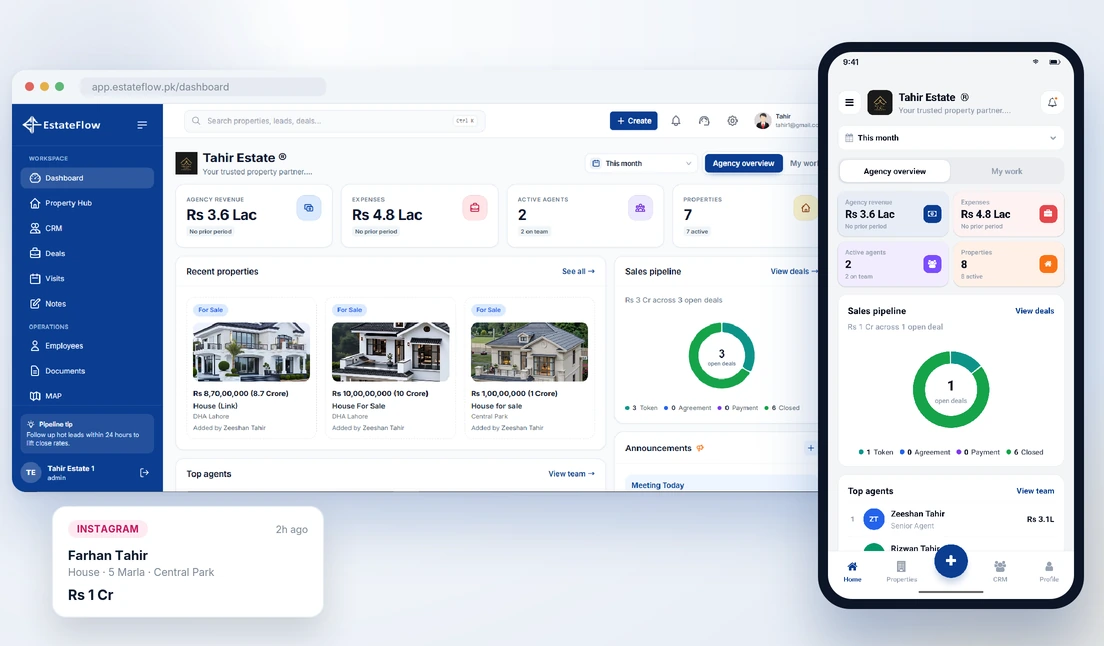
Most real estate agencies do not have a CRM problem—they have a disconnected data problem. Leads sit in one app, listings in a spreadsheet, visit notes in WhatsApp, and deal status in someone's notebook. Generic CRM tools help with contacts, but they rarely understand how agencies actually sell: a buyer linked to a specific property, a visit tied to a lead, a deal that moves through token, booking, and transfer.
This guide explains what to look for when evaluating real estate CRM software, common mistakes agency owners make, and how the right platform should connect CRM to inventory, visits, and finance—not replace them with yet another silo.
Why a generic CRM is not enough for property agencies
Sales CRMs built for SaaS or retail assume one contact maps to one opportunity. Real estate is different. The same buyer may tour five units. One listing may have multiple interested parties. A seller becomes a repeat client. Your CRM needs to model buyers, sellers, and leads separately while keeping every interaction tied to the properties involved.
If agents re-type listing details into the CRM or copy phone numbers from Facebook into a sheet, adoption dies. The CRM should pull from—or sit inside—the same system that holds your inventory.
Essential features in real estate CRM software
1. Lead capture from the channels you already use
Facebook and Instagram ads drive a large share of inquiries for many agencies in Pakistan and the wider region. Your CRM should accept Meta leads without manual export, assign them to agents, and show source so you know which campaigns convert. Phone and walk-in leads need the same structured entry—name, budget, preferred area, and linked listing if applicable.
2. Inventory-linked contacts
When an agent opens a lead, they should see which properties were discussed, which visits are scheduled, and whether a deal exists. That single thread—from first message to booking—is what separates agency CRM from a contact list. Look for software where CRM, Property Hub, and deals share one record per property.
3. Visit scheduling and field logging
Site visits are where deals are won or lost. CRM software should let agents schedule visits, mark outcomes, and sync from mobile the same day. If visit data only reaches the office later, your pipeline report is always stale.
4. Roles that match the floor
Owners need agency-wide visibility. Agents need their own leads, listings, and visits—not everyone else's commissions. Admins need finance and settings. Role-based access is not a nice-to-have; it is how you get agents to trust the system.
5. Mobile access with the same data
Agents work on site. A CRM that only works well on desktop will lose updates to chat apps. The mobile experience should cover listings, CRM, visits, and deal stages—not a read-only subset.
Red flags when evaluating CRM vendors
CRM sold separately from listings and deals. You will pay twice and reconcile forever.
No installment or commission context. Closing the CRM record is not closing the business—you still need collections and payouts.
Per-feature pricing that punishes growth. Adding users or modules should be predictable.
Long implementation projects. Agencies need value in days, not a six-month IT rollout.
Implementation checklist for agency owners
Import or add your active listings first—CRM without inventory context frustrates agents.
Define lead sources (Meta, referral, walk-in, website) so reporting is useful from week one.
Assign every open lead to an owner; unassigned leads rot in shared inboxes.
Run one weekly pipeline review using the same board agents update daily.
Turn on mobile for field staff before you add advanced finance modules.
How EstateFlow approaches agency CRM
EstateFlow treats CRM as part of the agency operating system—not a bolt-on. Leads, buyers, and sellers live beside listings, visits, deals, installments, and commissions. Meta lead capture, role-based views, and a synced mobile app are included in the same workspace owners and agents use daily.
If you are comparing options, start a free trial with your real listings and a week's worth of leads. The right real estate CRM software should feel obvious on day three—not after a consultant finishes configuration.